Inside Our Classrooms: The Power BI Program Turning Government Data into Decision Dashboards
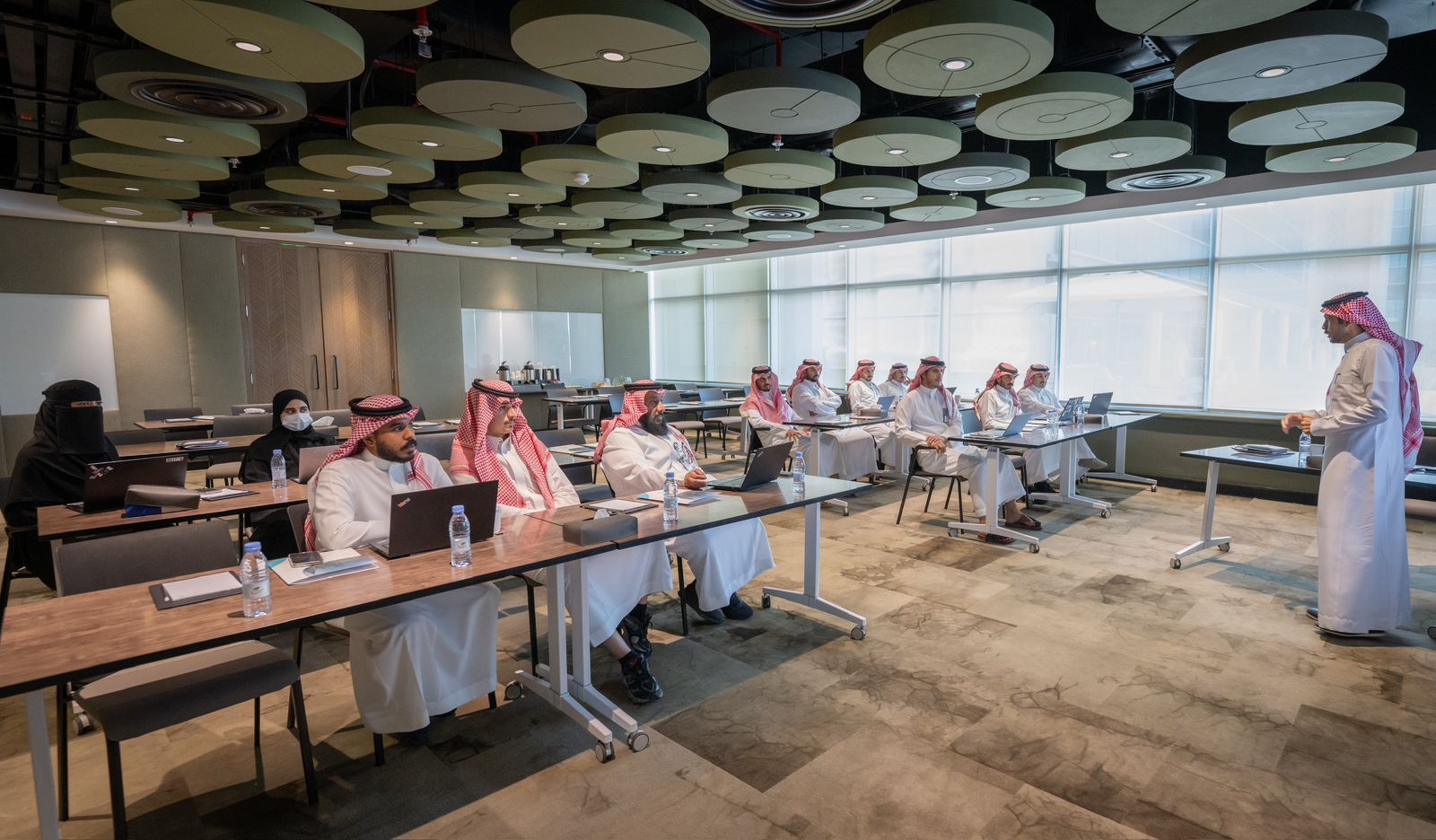
On a Sunday morning in a Riyadh training hall, twenty employees from different government departments sat behind their laptops while the big screen showed a single question with no chart on it: what decision do you want your data to support? That is how our Power BI business-intelligence program opens, because our experience with hundreds of trainees has taught us that the biggest obstacle to a successful dashboard is never technical — it is the absence of the right question the dashboard should answer.
The program is built on the ADDIE quality cycle we apply across all our curricula, but what trainees actually feel is a simple equation: a short explanation followed by a long hands-on lab. From the very first hour, the groups open Power Query on a deliberately messy export file — merged columns, dates in conflicting formats, missing values — because that is exactly what data looks like in real life, and anyone who learns data cleaning on perfect files will stumble over the first real file they meet.
Hands-On Labs on Real Data
The feature graduates mention most is working on their own organizations' data. Before the program we ask every team to prepare anonymized extracts from their systems — service-request logs, HR records, budget execution figures — and we build the exercises on top of them. The conversation then shifts from how do I draw this chart to why is processing time rising in this particular branch — a qualitative leap that anchors the learning to daily work from the first moment.
The middle of the program is the hardest and the most rewarding: data modeling and DAX measures. Here participants discover that an elegant dashboard stands on a sound data model — fact tables, dimensions, and carefully drawn relationships — and that one well-written measure replaces dozens of calculated columns. The trainer circulates between tables, questions fly, and then comes the moment we wait for in every cohort: someone calls out in delight because their year-over-year measure finally works, and colleagues crowd around the screen to see how.
What the Participants Built
On the final day the teams present their projects to a panel simulating a steering committee in their own organizations. One team built a service-request dashboard showing SLA compliance in near-real time and exposing process bottlenecks before they escalate; the HR team developed a turnover-and-Saudization dashboard connecting the numbers to departments and job families; a third team delivered a budget-execution tracker linking every spending line to the strategic initiative it serves. These were not practice exercises — they were first versions of real working tools.
What happens after the program matters as much as what happens in it. Following the Kirkpatrick methodology we use to measure training impact, we check in with participants weeks after graduation, and the results repeat themselves: weekly reports that once consumed two working days now refresh automatically on opening the file, and management meetings have shifted from trading impressions to discussing a single dashboard everyone can see. One participant told us his director asked him to present the dashboard at the deputies' meeting — which is exactly the moment training turns into institutional impact.
What we see in every cohort comes down to this: business intelligence is no longer a technical specialty confined to IT departments; it is a decision-making language every manager, analyst, and planner needs. As government entities move toward data-driven operations, investing in this skill is no longer optional. The program runs regularly in Riyadh, in person and online, and all a participant needs is a laptop and honest curiosity about their own data.
Dr. Saleh Al-Saleh
Strategy, Governance & Business Intelligence Consultant
An assistant professor of computer science at King Saud University, holding a PhD in computer science focused on big data and business intelligence from Queensland University of Technology, Australia. His leadership roles include Assistant Deputy Minister for School Affairs at the Ministry of Education and business intelligence advisor to the Saudi Customs Authority, where he oversaw data governance, business process automation, and ISO 9001 quality system implementation projects. A certified PRINCE2 project management practitioner, he delivers training programs in strategic planning, process modeling and automation, and knowledge discovery and management.
View profile