From Our TOT Workshops: What Actually Makes a Great Trainer?
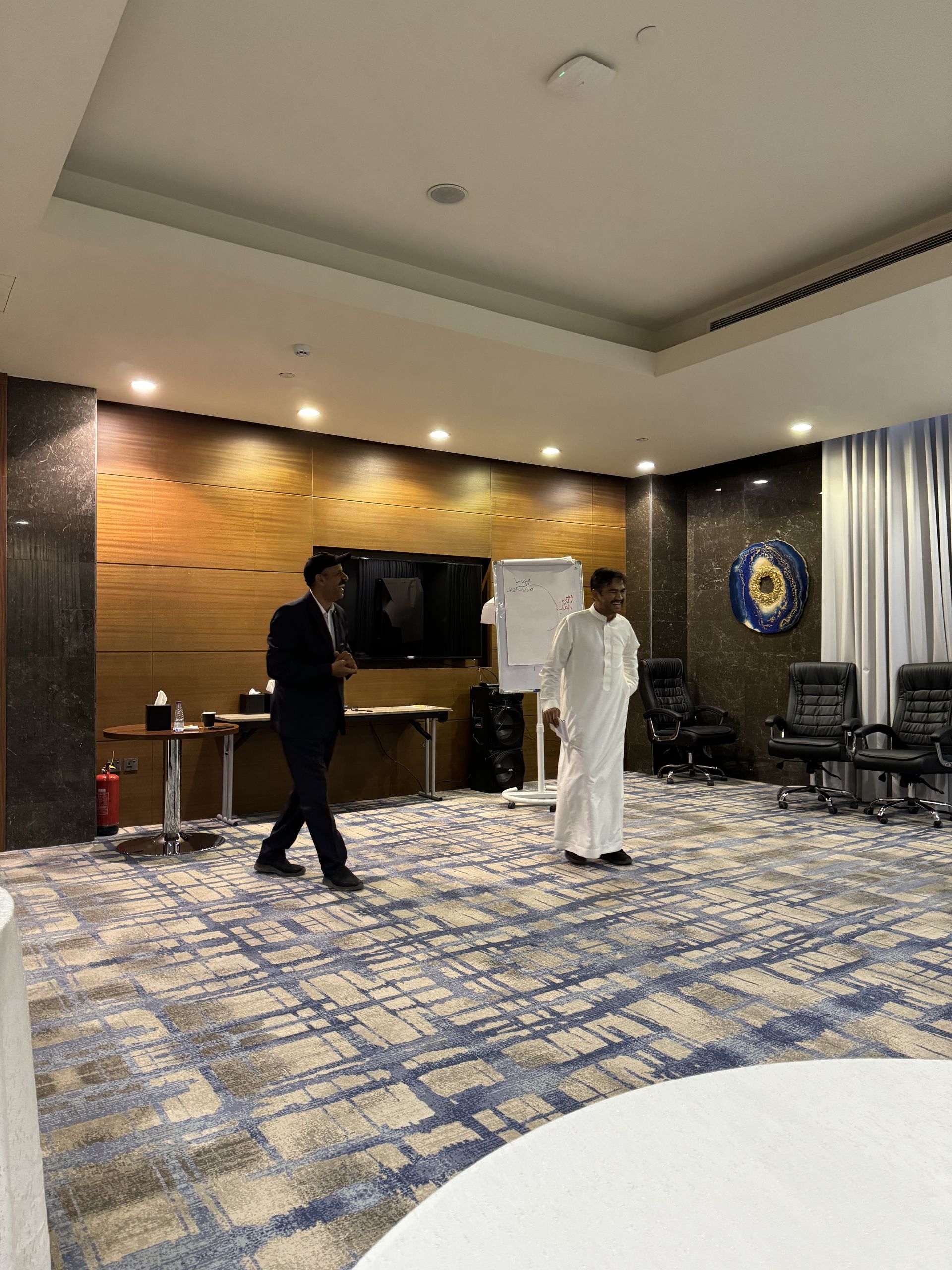
In a workshop room at a Riyadh hotel, a seasoned engineer stands at a flipchart to deliver the first micro-training session of his life — just ten minutes long. He knows his subject better than anyone in the room, and yet his hand trembles slightly as he writes the title. This moment repeats itself in every cohort of our Training of Trainers program, and it captures the first lesson the entire program is built on: mastering your material does not mean you can teach it.
Each cohort brings together experts from every walk of professional life: accountants, engineers, physicians, and HR officers assigned to pass their knowledge on to colleagues, alongside aspirants wanting to enter the training profession through the right door. Over the intensive workshop days, everyone undergoes the same transformation: from a presenter of information standing at the centre of attention to a facilitator of learning who places the learner at that centre. And this transformation is not a nice slogan — it is a set of specific skills to be practised, measured, and mastered.
Adults Do Not Learn Like Children
The program's first scientific pillar is adult-learning principles. An adult learner does not grant you attention merely because you are standing in front of them; they are silently asking: what does this have to do with my work, when will I use it, and what does it add to my experience? Participants therefore learn to design sessions around real problems rather than the table of contents, to summon the audience's own experience as a learning resource rather than an interruption, and to give trainees room for application and safe error — adults learn far more by doing and reflecting than by listening.
Then comes design discipline. Before graduates stand in front of any room, they have learned to write measurable learning objectives, to build a session structure on a deliberate rhythm alternating explanation, application, and discussion, and to manage the room's energy curve — knowing when to inject a kinetic activity and when to slow the tempo so a deep idea can land. It is the same mindset behind our own ADDIE-based program design: nothing in a good session happens by accident.
Presence and the Culture of Feedback
Trainer presence is the skill many assume to be innate talent; in the workshop we treat it as a learnable craft: vocal tone and range, deploying silence after a question instead of rushing to answer it, conscious movement around the room, and reading body language to catch boredom or confusion before anyone announces it. The micro-sessions are recorded, watched, and analysed, and participants see themselves as their trainees see them — an experience that is humbling and liberating at once.
But the lesson our graduates say changed them most is the culture of feedback. After every micro-session comes a structured review round from peers and the lead trainer under strict rules: describe the behaviour, not the person; be specific with an example; balance what worked with what can grow; and close with a suggestion actionable in the very next session. As the rounds repeat, something beautiful happens: participants begin to seek critique rather than fear it, and many carry this culture back to their teams and organizations — perhaps the program's most far-reaching impact.
Graduates leave the workshop with a complete toolkit: session-design templates, delivery checklists, and techniques for handling difficult classroom moments. But what we hope they carry above all is the profession's humility and its essence: a great trainer is not the star of the room but the one who makes the trainees its stars — and a trainer whose participants walk out able to do what they could not do that morning has mastered the craft.
Mr. Majed Almarzoqi
Human Development & Communication Skills Trainer
A certified trainer in human development and communication skills, delivering interactive, hands-on programs focused on practical application and personal and professional growth. He has experience designing and facilitating workshops in presentation and influence skills, self-development, life skills, and behavioral coaching.
View profile